
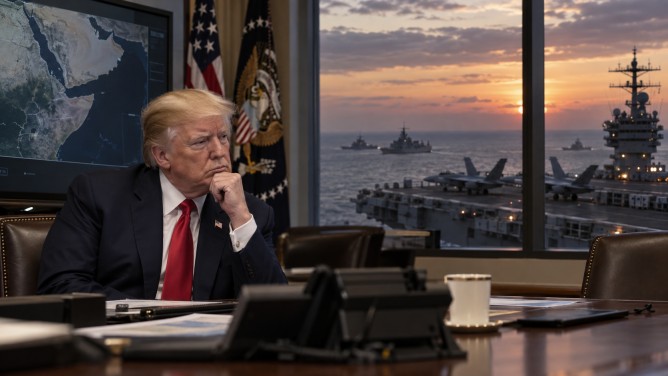
The escalating conflict in Yemen has drawn renewed attention as the United States grapples with its potential military involvement. Amid rising tensions and a complex geopolitical backdrop, President Donald Trump has postponed a decision regarding military strikes against Iran-backed Houthi rebels. This delay comes despite prior preparations by U.S. forces for possible air operations.
Saudi Arabia has been urging the U.S. to take action against the Houthis, who have ramped up attacks on Saudi interests. Initially hesitant, President Trump later directed the Pentagon to ready airstrikes following discussions with Saudi Crown Prince Mohammed bin Salman. Nonetheless, the administration opted to hold off on any immediate military intervention as of Sunday.
The broader context of U.S. military activities in the region, particularly its ongoing involvement with Iran, has added layers of complexity to the decision-making process. Some U.S. officials express concern that engaging directly with Houthi forces could stretch American military resources thin, potentially complicating the U.S.’s strategic objectives in the region.
The conflict in Yemen pits the Iran-supported Houthis against Yemen’s internationally recognized government, which receives backing from Saudi Arabia. The intensity of this conflict has surged once more, raising alarms over regional security and the potential impact on global energy routes, especially around the Red Sea and the Bab al-Mandab Strait.
Amid this volatile situation, doubts linger about the efficacy of airstrikes alone in altering the Houthis’ stance. The effectiveness of previous U.S. military operations in achieving a sustainable resolution has been questioned, highlighting the challenges of translating military action into political outcomes.