
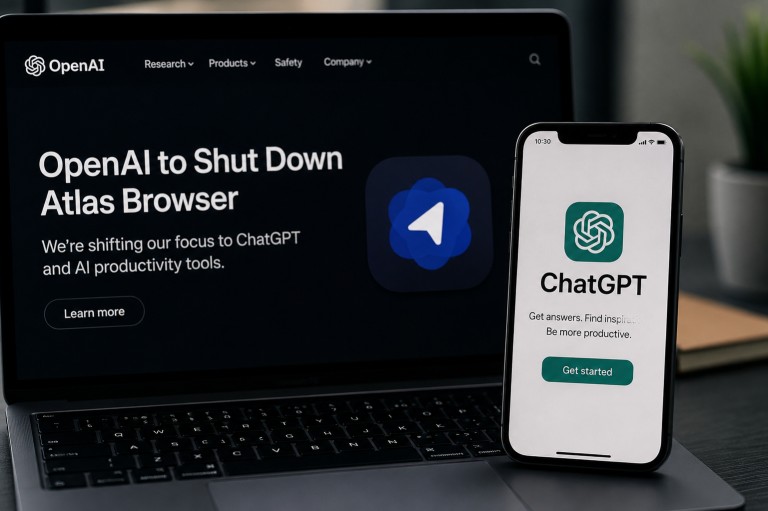
OpenAI has decided to cease operations of its AI-driven web browser, Atlas, with the closure set for August 9. The company plans to pivot its focus towards embedding Atlas’ essential browsing and automation functionalities into ChatGPT and several other AI productivity applications. This strategic move underscores OpenAI’s intent to enhance its existing AI tools rather than maintaining a separate browser platform.
The insights derived from Atlas have been instrumental in shaping OpenAI’s approach to AI-assisted browsing. Many of the browser’s sophisticated features are now slated for integration into the ChatGPT application. Furthermore, OpenAI has launched a ChatGPT extension for Google Chrome, which is designed to analyze webpage content, generate concise summaries, offer contextual information, and facilitate the execution of more complex automated tasks. Despite these advancements, OpenAI has clarified that these new tools are not intended to serve as direct substitutes for Atlas.
OpenAI’s shift in focus aligns with its broader strategy to concentrate on workplace productivity and AI agent development, rather than continuing to support a standalone browser. This strategic decision comes at a time when Google maintains its dominance in the browser market through Chrome. Google’s browser has consistently expanded its AI capabilities, integrating features such as Gemini, AI-assisted browsing, and AI-powered search functions. These enhancements have bolstered Chrome’s market position without necessitating a switch to a distinct AI browser.
This move by OpenAI highlights an industry trend where companies are embedding AI capabilities into popular applications to compete more effectively with established platforms. By prioritizing the integration of AI features into widely utilized tools, OpenAI aims to leverage its core AI products and services to meet the evolving needs of users, while also capitalizing on the extensive reach of existing software ecosystems.