
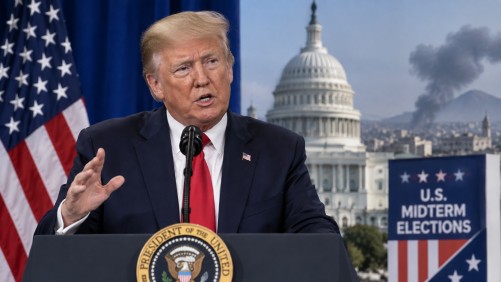
Amid ongoing tensions between the United States and Iran, President Donald Trump has expressed optimism that the conflict might conclude following the US midterm elections in November. In remarks made in Dublin, Trump suggested that Iran is attempting to manipulate the timing of the conflict to impact the electoral outcome in the US. He also predicted a significant drop in oil prices once hostilities cease.
On a different continent, Iranian President Masoud Pezeshkian addressed the BRICS Summit in New Delhi, emphasizing Iran’s preference for peace over continued conflict. Pezeshkian advocated for regional security to be managed by local nations rather than through intervention by the United States, reinforcing Iran’s stance against war.
The conflict has notably affected global energy markets, particularly in the Strait of Hormuz, a critical chokepoint for oil transportation. The heightened tensions in this area have contributed to oil prices soaring past $100 per barrel, reflecting the market’s volatility amid ongoing uncertainties.
Efforts to broker a lasting settlement between the two nations have not yet succeeded, with hostilities persisting at reduced levels. This enduring instability is causing widespread concern about the implications for regional security and the reliability of global energy supplies.
As both sides continue to navigate this complex geopolitical landscape, the world watches closely, hoping for a resolution that brings stability and ensures the uninterrupted flow of energy resources. The outcome of the US midterm elections may play a crucial role in shaping the future of this international standoff.