
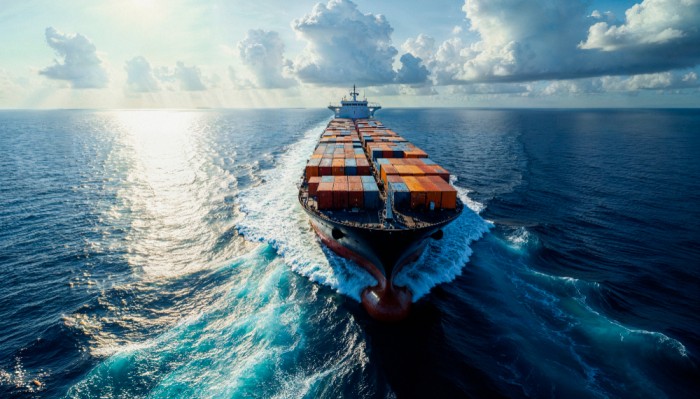
The Iran-supported Houthi Movement in Yemen has declared an all-encompassing prohibition on Israeli vessels navigating the Red Sea. This move comes with the group’s claim of launching a missile assault on Israel, sparking fears of potential disruptions in one of the globe’s crucial maritime trade routes. The Houthis have issued a stern warning, stating that any Israeli maritime presence in the Red Sea would be deemed a lawful military target, implying that Israeli-affiliated ships could be at risk of attack.
This declaration arises amid escalating tensions throughout the Middle East, coinciding with recent reports of renewed hostilities between Israel and Iran. The Houthis assert that their missile strike against Israeli targets was successful in achieving its goals. In response, Israel’s military acknowledged the detection of a missile launch originating from Yemen and confirmed that their air defense systems were activated to neutralize the threat.
Serving as a pivotal conduit for global shipping, the Red Sea links Europe and Asia via the Suez Canal. In the past, Houthi attacks on commercial vessels during the Israel-Hamas conflict prompted numerous shipping firms to alter course, opting to navigate around southern Africa. This detour significantly increased transportation costs and delivery durations. The current threat amplifies ongoing worries about the security of the Strait of Hormuz, another critical passage for worldwide energy exports. Any sustained disruption in either of these waterways could have profound effects on international trade and oil markets.
Part of the “Axis of Resistance,” a coalition of Iran-aligned factions that includes Hezbollah, the Houthis have maintained control over significant portions of Yemen, such as the capital, Sanaa, since 2014. Experts caution that renewed assaults on maritime routes could heighten risks for commercial shipping within the region, injecting more uncertainty into an already turbulent geopolitical landscape.