
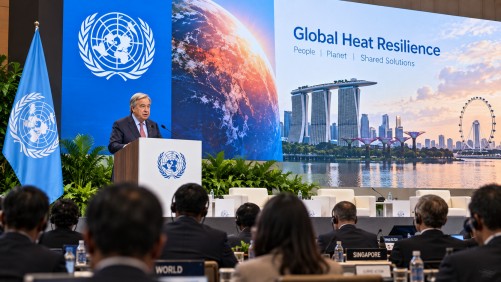
As global temperatures continue to climb, extreme heat poses an escalating threat to communities worldwide. In response to these rising risks, the United Nations has announced the creation of a Global Heat Resilience Roadmap, designed to assist countries in mitigating the impacts of severe heat and safeguarding vital sectors.
During a recent four-day forum held in Singapore, representatives from over 60 countries convened to discuss strategies for bolstering heat resilience and reducing emissions from cooling systems. The UN’s roadmap represents a collaborative effort to protect essential services such as water and food supplies, healthcare facilities, educational institutions, workplaces, and energy infrastructure during periods of intense heat.
A key focus of the initiative is to curb the environmental consequences associated with the increasing demand for air-conditioning. Currently, cooling systems are responsible for approximately 20% of global electricity consumption, with projections indicating this demand could more than triple by 2050. The roadmap encourages countries to adopt sustainable measures, including improved building ventilation, expanded urban tree cover, shaded public areas, and energy-efficient cooling technologies.
UN officials emphasize the necessity for robust policies, financing strategies, and emergency response plans to effectively address the challenges of extreme heat. The roadmap will also incorporate systems for monitoring progress and evaluating the effectiveness of national measures.
Singapore has taken proactive steps to address heat resilience, establishing a dedicated Heat Resilience Policy Office to manage these efforts. The country plans to open over 300 cooling centers during heatwaves and has implemented energy-efficiency standards for air-conditioners, leading to marked improvements in cooling efficiency.
The Global Heat Resilience Roadmap will build upon existing national strategies, allowing participating countries several years to develop and implement tailored responses to their specific climate conditions. This collaborative effort underscores the urgent need for a unified approach to combating the global heat crisis.