
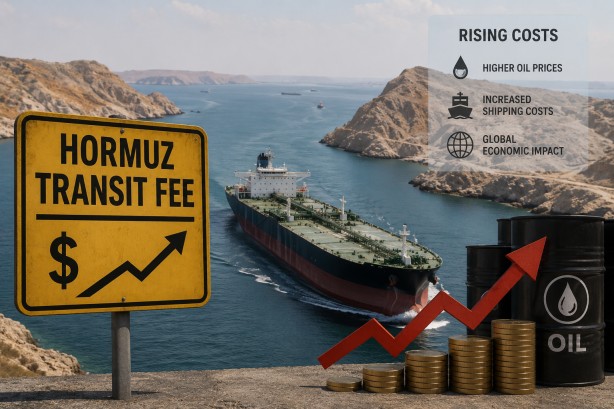
The Strait of Hormuz, a critical maritime passageway, could soon become a significant revenue source due to a new proposal by Iran and Oman. The plan seeks to impose transit fees on ships carrying oil through this strategic channel. With a suggested charge of approximately $1 per barrel, this fee aims to capitalize on the route’s importance to global oil transportation. Given that Brent crude currently trades near $86 per barrel, this levy would equate to about 1.2% of the oil’s value.
Handling about 20% of the world’s oil consumption, the Strait of Hormuz plays an essential role in global energy trade. Analysts project that the proposed levy could generate around $6.8 billion annually, eclipsing the revenue from transit fees collected by the Suez Canal. While the cost per barrel appears minimal, experts caution that this increase in shipping expenses could ripple through to affect fuel prices, air travel costs, freight rates, and the price of imported goods worldwide.
Proponents argue that implementing a clear and structured fee could prevent the more severe economic impacts associated with disruptions or temporary closures of the Strait, which have historically led to spikes in energy prices and market volatility. Nevertheless, questions linger about the long-term sustainability and enforcement of such an agreement, as well as its potential implications for global trade.
The possibility of heightened transit expenses is prompting Gulf nations to explore alternative export routes. The United Arab Emirates, for instance, is investing in pipelines and ports that bypass the Strait, while Saudi Arabia is increasingly utilizing its East-West pipeline to lessen dependence on this narrow waterway. These infrastructure developments could eventually reduce the volume of oil shipped through the Strait, potentially diminishing the revenue from the proposed transit fees over time.
Ultimately, these efforts to diversify export paths underscore the strategic importance of the Strait of Hormuz and the broader geopolitical and economic considerations at play. While the proposed transit fees promise substantial initial revenue, their long-term viability will likely depend on the evolving dynamics of global energy logistics and regional infrastructure investments.